Summary
Rod Serling earned writing credits on over 90 episodes ofThe Twilight Zone,an impressive number that combines stories crafted from scratch and adapting existing fiction into teleplays. Other writers contributed to the show but the ones Serling was purely responsible for are some of the show’s finest installments, and cover themes from fears about communist infiltration and nuclear strikes to the legacy of the Second World War.
Serling aimed to draw attention to the pertinent issues faced by everyday Americans in the post-war era with unique stories, a technique that Gene Roddenberry would use in the next decade. The writer used horror and suspense to communicate his ideas, and even if Serling’s contributions toThe Twilight Zonecomprise both hits and misses, his work still inspires other storytellers even decades after the show’s initial broadcast.

Updated June 03, 2025 by Kristy Ambrose:The Twilight Zone has stood the test of time, not only inspiring other writers but serving as the basis for revivals, reboots, and spinoff shows. Modern experimental television that gave us dark fantasy like The X-Files and Van Helsing owe something to The Twilight Zone, and there was even a stage play that launched as recently as 2018, perhaps related to the publicity of the re-release of the show in 2019. The art of creative writing and adaptation of literature to the silver screen is Rod Serling’s legacy, and we can relive it with his episodes of The Twilight Zone.
10The Mighty Casey
IMDb Rating: 6.1
Based on the famous American poem, “Casey At The Bat,” but also with considerable inspiration from stories likeThe Wizard of Oz, this episode takes an experimental turn into a combination of exciting science fiction and mundane daily life. Instead of working on a spaceship or as some kind of malevolent presence among futuristic humans, a robot would also be able to throw a wicked curveball.
Rod Serling asks what would happen to a robot built for baseball that finds himself playing with humans, and even more, what happens when he gains a human heart and starts to empathize with them. Instead of turning evil, which was the usual science fiction trope, Casey decides to retire from baseball and become a social worker, which is one of the most normal career choices anyone can make. It sounds boring, which is part of the point, that maybe robots and AI aren’t as dangerous or even as extraordinary as humans would assume.

9The Lateness Of The Hour
IMDb Rating: 7.1
A mix of horror and science fiction, with one of the famous Rod Serling twists at the end, “The Lateness Of The Hour” is set in an environment where life with robots is perfectly normal, or at least it appears that way. The main characters of the show, known only as Dr. William Loren and his wife, Mrs. Loren, share a home with several robot servants and their daughter, Jana.
The only thing strange about this arrangement is that Dr. Loren never lets anyone leave the house, and his teenage daughter starts to rebel against his strict rules. The doctor relents, but only long enough for Jana to discover she’s also a robot, but programmed as a daughter instead of a maid or butler. In a harrowing scene that was visceral even for the time, Jana discovers that she can feel neither pain nor love, and the episode ends with the daughter now reprogrammed as just another oblivious servant.

8The Long Morrow
IMDb Rating: 7.5
The night before he leaves for a forty-year journey through space, astronaut Douglas Stansfield, played by Robert Lansing, meets and falls in love with Sandra Horn, played by Mariette Hartley. The lovebirds are heartbroken that their romance is impossible. Stansfield will spend the voyage in a state of suspended animation, but Sandra will be an old woman when he returns to Earth.
Refusing to let this problem stand in the way of their relationship, the pair embark on separate schemes to beat fate, but with disastrous consequences. “The Long Morrow” has a perhaps unexpected legacy in that it inspired an episode of the cultcomedy seriesGilmore Girls. While Rod Serling would no doubt be surprised to learn of the connection, it only confirms the enduring appeal of bothThe Twilight Zoneand “The Long Morrow.” Forty years may be a long time but Serling’s script still tugs at the heartstrings.
7In Praise Of Pip
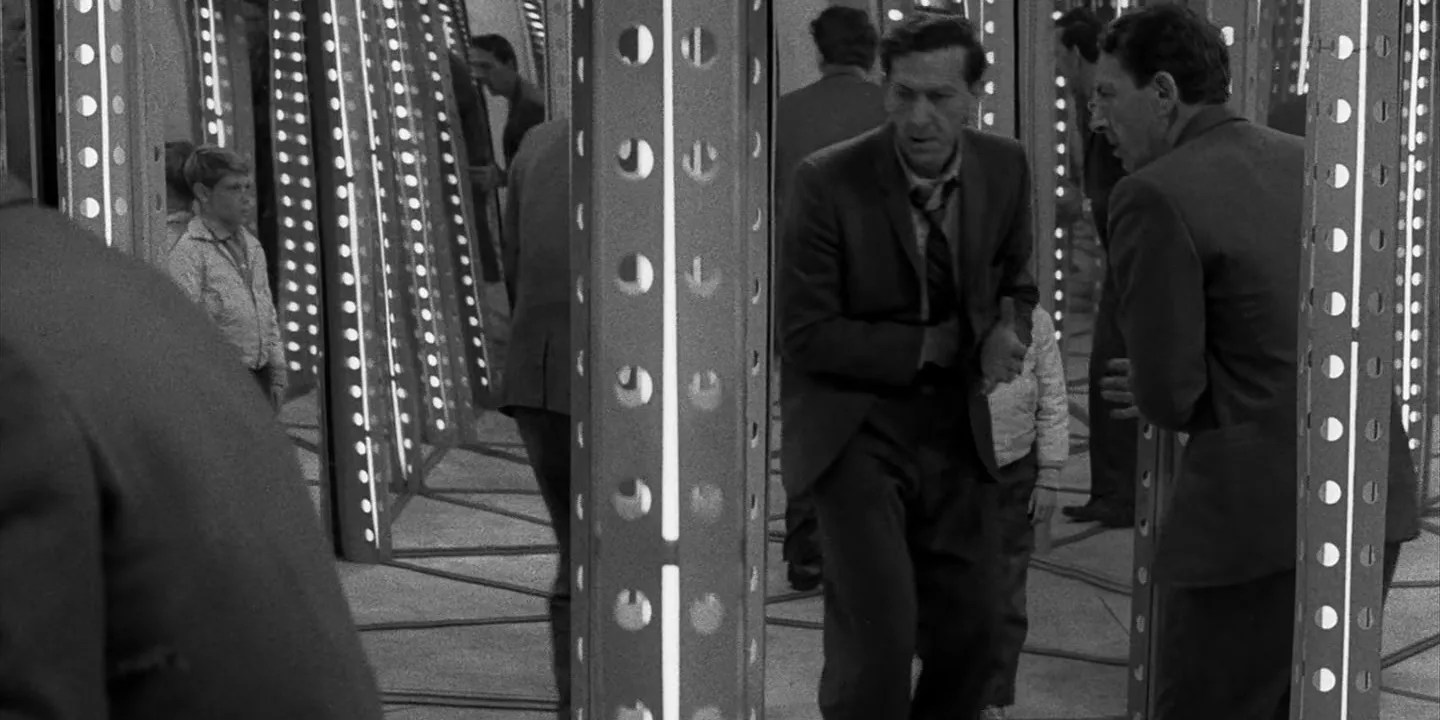
Rod Serling’sTwilight Zonescripts can be terrifying, such as “Nightmare as a Child” orthey can be comediclike “Mr Dingle, the Strong”, but they can also be incredibly poignant. Such is the case with “In Praise of Pip,” which kickstarts the show’s final season with a touching tale about a deadbeat father’s love for his estranged son. After Max Phillips, played by Jack Klugman, learns his son is dying in Vietnam, he reassesses his life and decides to do what he can to protect his son no matter the cost to himself.
Serling’s script may be his own, but he is guilty of committing a degree of self-plagiarism. “In Praise of Pip” reuses aspects of an episode that Serling had written for another anthology series,Kraft Television Theatre, although it swaps the Korean War used in the earlier script for the then-contemporary Vietnam War. Given thatKraft Television Theatreis partially lost media, it’s a good thing that a more readily accessible version of this story exists.

6Mirror Image
IMDb Rating: 7.9
Nefarious doppelgängers are a classic genre fiction trope, from Albert Finney’sThe Body Snatchers,adapted asInvasion of the Bodysnatchersin 1956 and 1978, toStar Trek’s shape-shifting Founders. Serling’s take on the concept tests the sanity of Millicent Barnes, played by Vera Miles, a young woman stranded at a bus station in a storm. Despite her denials, the staff claims to have seen her before, while her luggage appears to shift around at random.
Serling’s script deftly treads the thin line between the supernatural and normal delusions, forcing the audience to keep guessing about Millicent’s true condition. This atmospheric story is supported by strong visuals, making it a worthwhile trip intoThe Twilight Zone.

5Where Is Everybody?
Although Serling had tested outThe Twilight Zoneconcept with 1958’s “The Time Element,” it’s still impressive how polished the show’s first episode is. While other science fiction franchises are notorious for their weak starts, “Where Is Everybody?” strikes gold from day one. A man, played by Earl Holliman, wakes up in an unfamiliar town with no idea where or who he is. His efforts to find answers are further complicated by the fact that the town is completely lifeless.
The Twilight Zone’s debut effort makes for an eerie and often unnerving episode, thanks to an inventive script that relies on mirrors and store mannequins to produce the illusion of there being others in the town. By definition, the installment also features the show’s first twist ending, a trope that would come to define the series andmany of its best imitators.
4The After Hours
IMDb Rating: 8.4
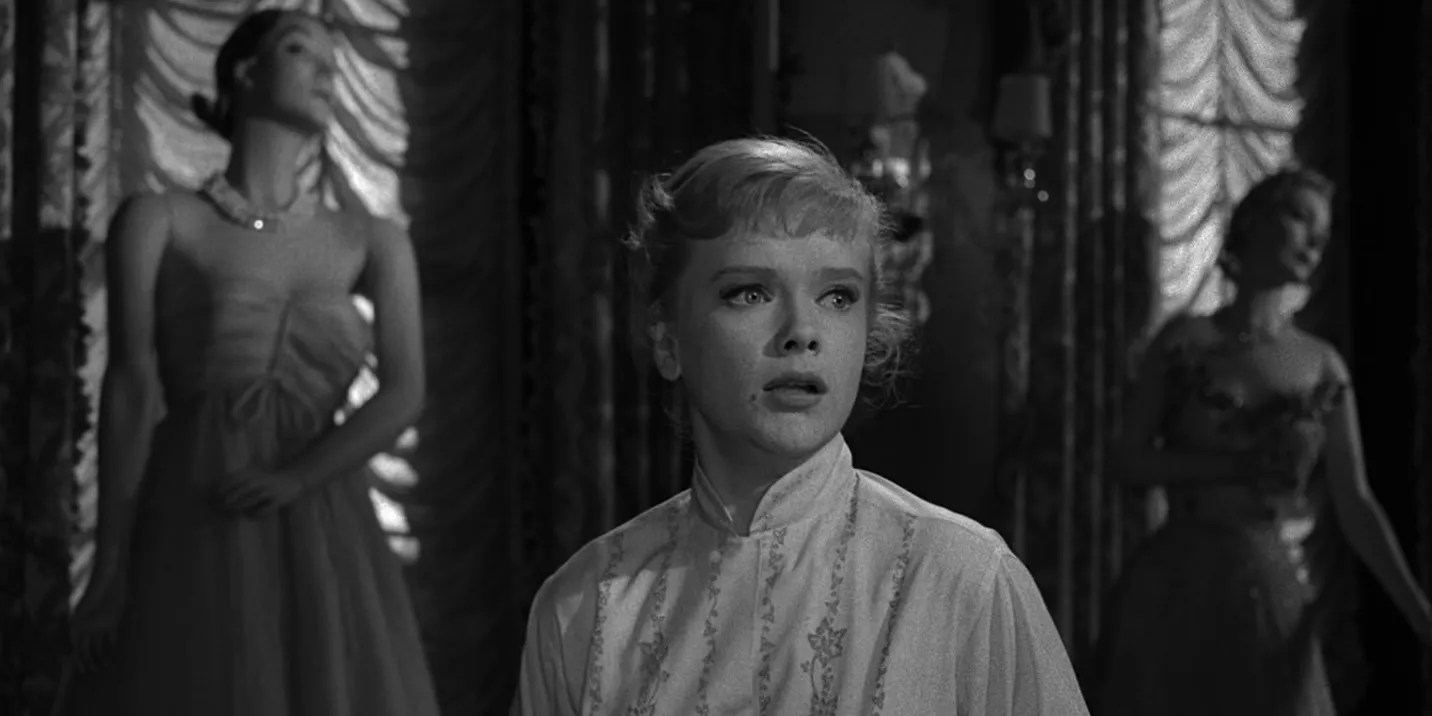
“The After Hours” represents the Platonic ideal of aTwilight Zonestory: a seemingly normal person finds themselves trapped in an unusual situation that will challenge everything that they think they know. It also represents one of the show’s most terrifying installments, particularly for sufferers of automatonophobia, which is the fear of human-like figures such as dummies.
When Marsha White, played by Anne Francis, visits a department store to purchase a gift, an encounter with a strange saleswoman results in Marsha being trapped in the store overnight and perhaps for far longer. Serling’s premise wasstrong enough to be revisitedwhenThe Twilight Zonereturned to screens in the 1980s. However, despite the remake’s interesting take on some of the episode’s more horrific aspects, the original remains the definitive take on the concept.

3The Masks
IMDb Rating: 8.6
When the wealthy Jason Foster, played by Robert Keith, learns of his impending death, he decides to settle some old scores by taking his ungrateful relatives on a one-way trip intoThe Twilight Zone. His daughter is neurotic and married to a ruthless businessman, and his grandchildren are self-obsessed and psychopathic.
There is no love lost between Foster and his family. He tells them that to inherit his fortune, they must spend Mardi Gras night wearing horrific masks that reflect their gruesome personalities.

While “The Masks” is Serling’s script, another member of the production team is also worthy of recognition.
The episode was directed by Ida Lupino, an actress who had previously appeared inThe Twilight Zone’s first season. As such, it is unique among the originalTwilight Zoneinstallments in that it was the only one to be directed by a woman. It also features some of the franchise’s most memorably grisly visuals, making it a standoutfor fans of horror.

2The Monsters Are Due On Maple Street
IMDb Rating: 8.9
Serling’s desire to interrogate as well as entertain inevitably resulted in many scripts focused on life in America during the Cold War. “The Monsters Are Due On Maple Street” is the archetypal example of the subgenre, effectively capturing the creeping suburban paranoia that caused normal American citizens to turn on one another.
Following a series of bizarre events, the inhabitants of the normally pleasant Maple Street quickly begin to denounce one another as they search for enemy aliens. Witch-hunts are a common trope, fromviral games likeAmong Usto classic theater like Arthur Miller’sThe Crucible.
Rod Serling’s take on the concept is widely regarded as one ofThe Twilight Zone’s most iconic stories and was influential enough to spawn an updated remake in the early noughtiesTwilight Zonerevival. While the remake uses the War on Terror as its backdrop rather than the Cold War, the social tensions and human flaws captured by Serling are timeless.
1Eye Of The Beholder
IMDb Rating: 9.1
Due to its reliance on unusual camera angles, “Eye of the Beholder” was considered the hardest episode ofThe Twilight Zoneto produce. Luckily, Serling’s script is more than worth the additional effort, as this iconic tale of an apparently hideous woman’s attempts to fix herself through surgery is well-known even outside of fan circles.
All is not as it seems, andthe final twist relays a timeless lessonabout what it means to be beautiful. Serling himself recognized the quality of the basic premise, choosing to reuse it, with some alterations, inNight Gallery, a 1970s successor toThe Twilight Zone. Despite writing the episode, Serling found himself in legal hot water when a rival television producer threatened to sue for copyright infringement.
The producer claimed that Serling’s episode stole the title of an existing educational film. To prevent further issues the script was renamed “The Private World of Darkness” in many syndicated versions.
